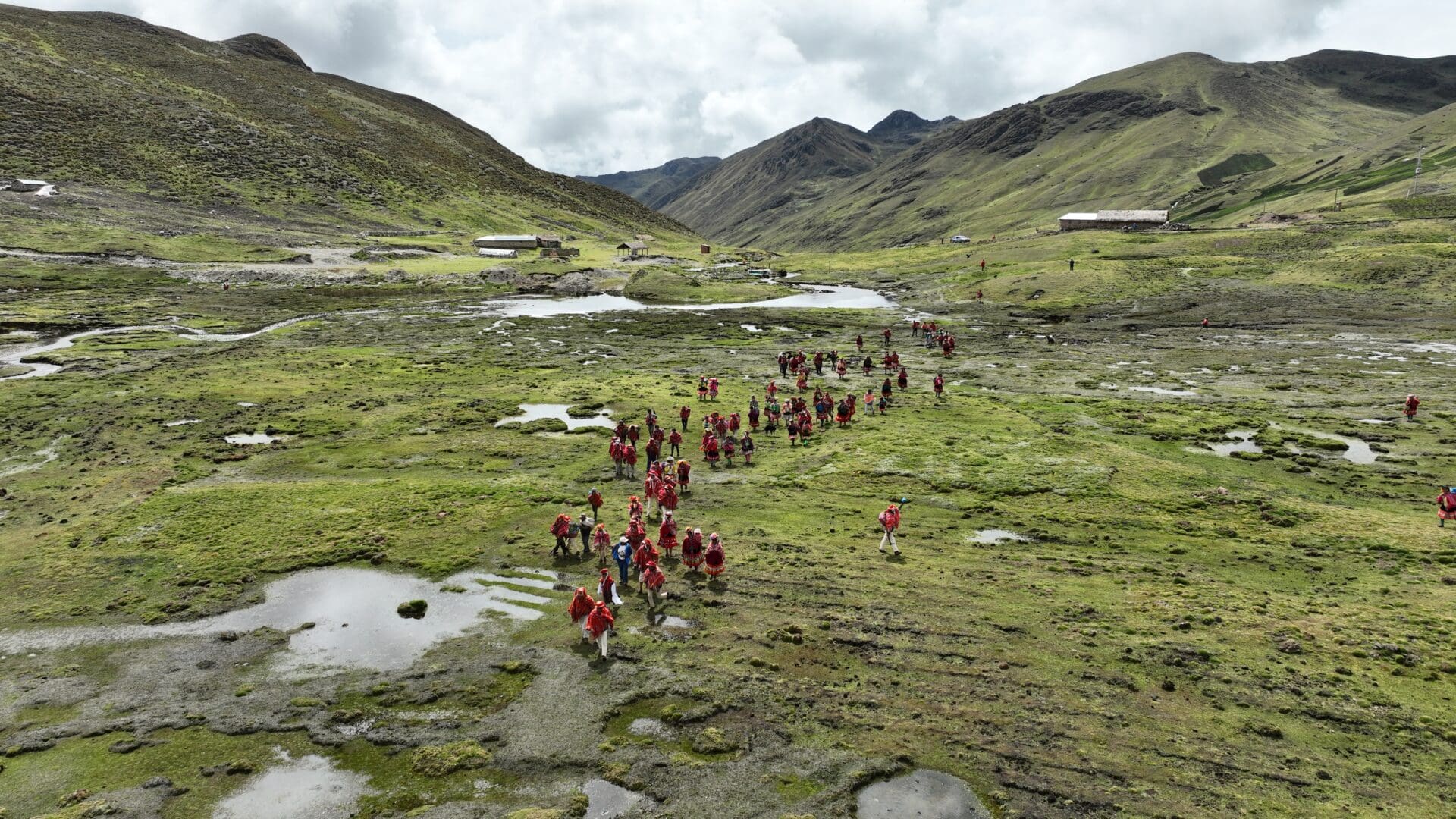
A Call to Action: Protecting and restoring nature must become a collective mission.
The necessary scale of ecosystem restoration to avoid the worst outcomes of climate change will require conservation partners and leaders across the globe, billions of dollars invested, and a global commitment to halt the senseless destruction of native ecosystems.
But more importantly, true regeneration demands a profound shift in perspective—away from viewing nature as a commodity and toward embracing restoration and environmental justice as a life-defining purpose. Global Forest Generation advocates for a world where thriving ecosystems sustain thriving communities, bringing justice and balance back to our planet.
Issues We Care About
Water Security
Glaciers in the Andean region are a vital source of water for people, agriculture, wildlife, and enterprise throughout the continent and have been for millennia. Yet, these glaciers are smaller now than they have been in at least 11,700 years. Polylepis forests are the only natural substitute to melting glaciers. They capture precipitation and run-off and replenish groundwater. The roots of trees and their soil are Earth’s filtration system, purifying water. And they perpetuate the water cycle, returning water vapor to the atmosphere through their leaves. Globally, moisture captured by forests (not just Polylepis trees) accounts for forty percent of the planet’s annual rainfall. Learn more about the mighty Polylepis tree and how it is helping to ensure water security for the region.
Wildfires
Unprecedented droughts and wildfires across the Andean region have impacted ecosystems and economies. Overall, there were over 346,000 fire hotspots recorded in South America in 2024, surpassing the 2007 record. And in early 2026, wildfires tore through native forests in Patagonia in southern Argentina, putting communities at risk.
Drought
Record droughts in South America have led to water rations and planned power outages — upending lives and economies. The 2024 droughts were particularly extensive, leading to parched crops, disrupted transportation networks, and interrupted hydroelectric power generation in parts of Brazil, Bolivia, Colombia, Ecuador, Peru, and Venezuela. Local conservation partners in Ecuador had to delay tree planting after a prolonged dry spell and late arrival of seasonal rains. In light of these challenges, Global Forest Generation recently launched a water monitoring program to provide much-needed and unprecedented understanding of how much water is retained from our high Andean reforestation efforts. Initial findings from pilot projects in Peru, Bolivia, and Ecuador show that forest restoration improved watershed function, supporting both local biodiversity and downstream water users.
Deforestation
Across the Andes (Argentina, Bolivia, Chile, Colombia, Ecuador, Peru, Venezuela), only 500,000 hectares (1.2 million acres) of Polylepis forests remain — just 2-5% of their historical range. Four fifths of the 45 species that make up the genus are considered threatened. Conserving intact forests has always been a priority, and in 2025, we launched a Forest Protection Program to continue providing natural disaster prevention resources in response to growing forest fire risk. Unfortunately, the need is far greater than current funding allows.
Additional Resources
Learn more about water, biodiversity, and Polylepis forests in the Andes.